Mail pertaining to Creo takeover


I have held onto this mail for some time, but I think its time to publish it. I think it is very revealing about the way Creo viewed Scitex during the takeover.

Notice the email address for “Ex-Creo only” Star Trek fans may see a similarity with “The Borg”….

.

From: Boudewijn Neijens Sent: ‘Thursday, July 13, 200012:00 PM .

To: **Names Removed** .

Cc: Europe Office {ex-Creo only); Alon lumbroso; Paul Kelly; Michel Couchard .

Subject: RE: Work organization of ex”Creo” team


Hi guys, I read all your comments and I can understand most of them. Now put yourself in the shoes of your manager: she/he has been “forced” for years to work in a very restrictive environment where everything was controlled and driven by budgetary constraints (and a fair serving of autocratic decision making at the “top” for some areas). After a while you learn how to operate under these constraints and you start conditioning your troops to do the same. That’s where the Blue team comes in with its very different operating principles, and of course the Red managers are puzzled if not scared by the new principles. let’s not forget that it’s actually much more difficult to be a team leader (or manager) in the Creo system than in the Scitex system: it’s much tougher to achieve results by gaining consensus and ensuring everybody is fully informed than by simply “barking orders” (OK, this is an exageration but you get my point).

So it’s clearly the top management’s role to “condition” the middle management and prompt these guys/gals to adopt new working methods. So far we have had very little success here as the top management was disfunctional. This is now changing and we’re making rapid progress. We’re indeed preparing a meeting of all middle management end of August (not possible earlier with most on hols). The purpose will be to present -and get buy-in ~ to the operating principle of the company. Up the the first tier of middle management to then relay this “further down”. We will make very sure this happens.

One of the first changes we wanted to make is already implemented and is showing good results: every new candidate to a position {internal or external) is now interviewed by a group of people (as opposed to HR and the direct manager alone) and hiring decisions are made by this group. Needless to say this first change was also a crucial one: it ensures that we build a “new” organisation based on the right people. You might think of this as a small step but it is not: again, put yourself in the manager’s shoes. All of the sudden you are stripped of the power to hire and fire alone in your department. For many managers this is a huge change in authority, and a clear appetiser of things to come. So it forces every manager to start thinking very carefully on the merits and implications of such a more participatory system.

Am I happy with the way things are going? Yes and no. Yes because there is a genuine understanding in the new MD&VP team that this needs to happen asap and thoroughly. No because many of the Boston Principle can be interpreted narrowly or widely, and the current tendency is to take the narrow view, also based on the assumption that most ex-Red people cannot “absorb” the full extent of the Boston Principles. This to me is BS but only time will tell, and hey -we need to start somewhere.


Paradigm has taken a different path.

ELDAD WEISS KNEW THE time to do something had ar­rived in late 2001, when the share price of his company had dropped to $3. It wasn’t because Paradigm, which Weiss founded in 1988 and which began trading on the NASDAQ stock exchange in June 1998, was doing badly. In fact, revenues of the firm which provides software technology to the oil-exploration industry were headed towards a new annual high of $72.8 mil­lion and were rising by over 30 percent a year.Eldad_Weiss

The problem, recalls Weiss, a youthful 47 with pale, almost-white hair, sitting in his spacious office in the high-tech area of Herzliyah Pituah, north of Tel Aviv, was that the share price reflected the state of the stock market, not the value or success of the company. Paradigm which was spun out of Scitex in 1988, when that firm focused on printing technology was moving forward. But Weiss feared that the depressed share price would turn it into a “zombie” company, whose shares were vir­tually dormant and hardly traded.

“The share price was ridiculous,” says Weiss. After all, Paradigm then had 21 of­fices in 18 countries, and had established itself as the world’s largest independent provider of software for oil and gas ex­ploration, using a combination of seismic data and mathematical algorithms to build three-dimensional models of underground oil fields. “Paradigm was hurt by the gen­eral atmosphere after the September 11 terror attacks and the lack of confidence, worldwide, in the high-tech industry,” he says.

The $3 per share less than half of the $7 price when Paradigm went public in 1998, and a third of its high of$ 10, in 2000 also raised concern that the lack of in­vestor confidence might spill over into the more than 500 customers of Paradigm’s still-thriving business, who include Exxon, Shell, Esso, Mobil and others among the world’s leading drillers.

Some months earlier, Weiss had received inquiries from Fox Paine, a San Francisco-based firm that manages over $1.5 billion in liquid assets and $6 billion in investments, which special­izes in providing capital for “friendly” buyouts of exist­ing companies by manage­ment, for investors or on its own behalf. These buyouts often involve “going pri­vate” the conversion of a company whose shares are traded on a stock market into private ownership, by purchasing all of its publicly traded shares.

paradigm_3DThe idea of going private which at first seems the antithesis of the dream of young companies to “go public” with an initial stock market offering tempted Weiss. For one thing, it would lift the pres­sure of worrying about how Paradigm’s quarterly balance sheet would affect the share price, enabling management to move its focus from the short-run to long-term growth.

“We’re an ambitious company, and we felt that to make Paradigm the company we believed it should be, in terms of its size and performance, we needed to move away from the frustrating position on the stock market,” Weiss confides, adding that the change would also provide the cash needed for expansion.

“Let me make one thing clear, it was a positive thing, not because we were in trou­ble” interjects Shai Buber, 38, a Paradigm vice president.

The strategy of going private is a sound one in the current global and local invest­ment climate, agrees Ze’ev Holtzman, chairman of Tel Aviv-based Giza Venture Capital. “Being a public company is some­times a liability,” he explains, citing the difficulty to raise needed funds and new U.S. Securities and Exchange Commission regulations, which impose conditions that cost up to $1 million in directors’ insur­ance and licenses.”

Paradigm and Fox Paine began serious negotiations on going private, and reached agreement within six months. On May 22, the two sides announced that they had signed on a $102-million deal.

The deal was seen as a vote of confi­dence in Israeli companies, if not the Israeli economy as a whole. Particular signifi­cance was attributed to the fact that it was the first Israeli acquisition by a major in­vestment fund like Fox Paine, whose pre­vious acquisitions include two large telecommunications firms in Alaska, Mex­ico’s top provider of agricultural seeds, large medical equipment and health care providers, and Penhaligon’s, a 130-year-old London-based manufacturer and retail­er of luxury gifts and fragrances.

At the time of the acquisition, Saul Fox, one of Fox Paine’s founders, said he thought Paradigm “was very exciting” but had not been able to get fair value on the open market because of the high-tech crisis. His firm paid$5.15 per Paradigm share, up 15 percent on the market price the day of the deal and 70 percent higher than the $3 that had made Weiss start thinking of a deal in the first place.

Though Fox had always had some in­terest in Israel, Weiss makes it clear that the agreement was strictly business. Since the transfer of ownership was completed last August, Weiss says, Paradigm has been moving forward towards its eventual vi­sion, revenues in the annual $200 million-$300 million range.

He reinforces his point by describing a recent gas find in the Krishna-Godavari Basin, in southeastern India. “We helped Reliance, India’s second largest oil com­pany, locate India’s largest gas resource. It’s very rewarding because this particular find has changed the Indian economy,” he says. “When it is developed, it can change the country. Rather than buying gas as they now do, from Bangladesh or Qatar, the Indians will be able to use their own resources. ‘(According to New Delhi’s au­thoritative Times of India newspaper, the find has the potential of tripling India’s share of world fossil fuel production from its current 0.9 percent.). The Indian discovery “gives us a good feeling,” Weiss says. Beyond that, he ex­pects it to provide added value that will attract new customers to Paradigm.

The enthusiastic executive doesn’t, however, see the Fox Paine sale as the final chapter in the ownership of Paradigm, where Eldad has stayed on as CEO. In fact, he doesn’t rule out putting the firm back into the stock market some day, as a more mature and experienced enterprise. If that happens, he smiles, “having Fox Paine ownership as part of our track record would certainly be an asset for us.”

Dror Haroush- Director of Customer Support & Training at Noosh.

Dror_Haroush

Dror_Haroush

Dror Haroush, (dror@noosh.com) is the Director of Customer Support & Training at Noosh.
Noosh Inc. (www.noosh.com), a young, Palo Alto, CA based company, is an Internet service that connects between people who buy, sell and manage print. It focuses on bringing buyer and seller together, collecting a fee when the job is paid for, but otherwise stays out of the business relationship. Before joining Noosh, Dror was the manager of Quality Assurance and International Customer Support & Training in the Print On Demand division of Scitex.

Hanan Drori, now with Scitex Asia Pacific

Hanan_Drory_2Many people join ExScite, but some people decide to leave us (that is: to rejoin Scitex). Hanan Drory (HDrory@compuserve.com) , a veteran Scitex warier is re-joining Scitex Asia-Pacific (his third time around). He has informed us that he had made a decision (hopefully a good one …) to leave DGS Israel (Purup-Eskofot) and relocate to Scitex Asia Pacific in Singapore. Hanan will be holding the position of “Regional Sales Director” responsible for Singapore, Malaysia, Thailand, Vietnam and India. So, when in Singapore, do not hesitate and give him a call. Hanan was one of the first employees at Scitex and was both at STCL, STJ and STAP. He had left the Scitex in the 70’s to complete his masters degree in Australia, and came back to rejoin the company.He will remain an honorary ExScite member, having made the trip to hell and back several times…….

Mike Tomono’s International Strategic Consulting in Japan

Mike Tomono

Mike Tomono

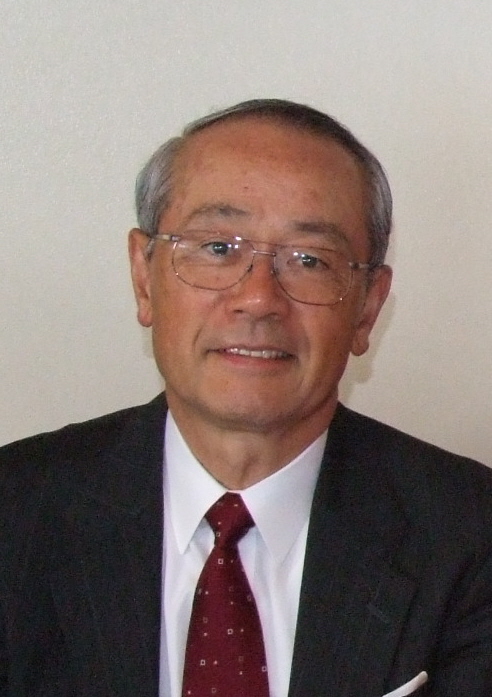
Mike Tomono mtomono@ms.tokyo.jcom.ne.jp has started an International Strategic Consulting business in Tokyo- Tomono Corp. Ltd. The company’s consulting services are directed towards high technology companies, foreign companies looking for doing business in Japan and Japanese companies interested in doing business abroad. The company’s web site is at URL: http://www.tokyo.jcom.ne.jp/~mtomono/
Tomono had a long career at IBM Japan, holding a number of executive management positions in sales, marketing, finance, manufacturing, and business development.
From 1993 to 1996, he was President & CEO of Nihon Scitex Ltd. (STN). Under his leadership, the annual revenues of Nihon Scitex doubled and became profitable company. Until recently, he was COO of the Tokyo based Novatec Corp. where he created and managed the graphics product sales and services division – which became a full-fledged organization producing a margin within the company.

Reuven Anati

Reuven_AnatiReuven Anati (Email: nyanati@wis.weizmann.ac.il ) is the head of the recently dedicated Everett Technology Workshop at the world-famous Weizman Institute in Rehovot, Israel.

He designed and supervised the building of a garden of wonders, located at the Clore Garden of Science at the Institute.

The exhibits at this unique museum are designed to stimulate a child’s wonder about the world while communicating scientific principles. Each exhibit demonstrates a natural phenomenon. The exhibits are hands-on for the young (and young at heart), most of whom are arriving on field trips from all over Israel. The Clore Garden of Science has become a popular tourist destination.

Prior to his career at the Institute, he was one of the first of employees at Scientific Technology in Rehovot (that later on has become Scitex in Herzlia). Reuven was one of the chief mechanical designer. He designed many of the first mechanical products of the company.

Anati received the Weizman Institute President’s Prize, the highest honor conferred on an employee of the Institute. He was also recipient of the nation’s Kaplan Prize, awarded by former President of Israel Zalman Shazar. The prestigious award is bestowed on inventors for patent applications. Anati’s patent, developed while at Scitex, is for a unique scanner that reproduces patterns on cotton jersey knit.

Scitex negotiating with Creo & Nur to sell business units, shares climb

Scitex Is in Talks to Sell Two Units, Report Says By Bloomberg

Monday , Dec 13, 1999 Sun-Thu at 18:00 (GMT+2) Source: High Tech News, Globes of Israel Scitex, an Israeli maker of digital printers, is in talks to sell two of its main units, Yediot Ahronot reported, citing unidentified sources. The company plans to sell part of its digital printing business to Canada’s Creo Products for about $400 million, the newspaper said. Also, the company is in talks to sell its wide-format color printers unit to Nur Macroprinters, which makes competing products, in exchange for shares. Last month, Scitex said three of its biggest shareholders agreed to acquire the 13.3 percent stake owned by International Paper, the No. 1 paper maker, for $80 million.


Rony Ross selling her Panorama Software technology to Microsoft


 Eight years after its first financing round, selling its technology to Microsoft for $20 million, Panorama Software Systems is holding a new financing round.Gilad Nass   13 Apr 03   16:32

Roni Ross

Roni Ross

Ross was the first Israeli to sell a company – to be accurate, most of a company – to Microsoft (Nasdaq:MSFT). At entrepreneur conferences, which are not exactly bastions of feminism, she and Ornet cofounder Dr. Orna Berry (now chairperson of Lambda Crossing) are always cited as proof that ?you don?t have to be a man to succeed in high-tech.?


After working for years in various positions in Israeli companies, Ross went to the US in the 1980s to complete a Ph.D. in computer sciences. She founded a company to market voice mail systems, which failed. After joining CAD/CAM (Computer Aided Design / Computer Aided Manufacturing) company MetalSoft, she returned to Israel, after convincing its owners to set up a development center in Israel. Ross later sought alternatives after it became apparent that global demand for CAD/CAM solutions was stagnant, and founded a new company to develop Microsoft Windows applications.


The company?s activities in Israel exposed Ross and her team to market needs, and she decided to switch to OLAP (online analytical processing) business intelligence software, which provide executives with graphic depictions of market conditions, instead of having to wade through mountains of data. In contrast to companies that still based their programs on DOS interface, Ross gambled on Windows.


Ross financed her company from her own pocket, after local venture capital funds declined financing. She did not want a grant from the Office of the Chief Scientist. She founded Panorama Software in 1993, and began amassing Israeli customers within two years. She still needed money, and in July 1995, Ross convinced Ariel Landau, a former executive at Elbit Systems (Nasdaq: ESLT; TASE:ESLT) and Elscint (NYSE: ELT ) and now manager of Pamot Rehovot Advisors, and another partner to invest $200,000 – less than half the amount she had asked of the venture capital funds.


Picture-taking in front of Microsoft


The rest is history. A stubborn pursuit of OLAP expert Nigel Pense led to a meeting in an English pub. Pense was so impressed that he promised to help the tiny company, and shortly afterwards published a report praising Ross?s technology.


At this point, Ross decided the time had come to expand outside of Israel. In 1996, she began meeting with international software companies, including forming personal connections with Microsoft staff in Seattle. ?I even traveled to Microsoft to be photographed in front of the company?s sign to tell them I had been there. I couldn?t think about anything else,? she relates.


Panorama Software?s staff presented their software to Microsoft?s team, after which they were asked to stay for another meeting. Three hours later, Microsoft offered to buy the company. Ross owned 87% of Panorama Software at the time.


?We had 60 customers in Israel at the time, including major companies like IDI Israel Direct Insurance, Sahar Israel Insurance Co., the Israel Prison Service, Cellcom, and Elite (TASE:ELEI1),? says Ross. ?Microsoft didn?t plan to acquire our product and sell it as is. They wanted the development plans in order to integrate them into their work environment.


?How would that have affected our existing customers in Israel? Who would support them? I therefore proposed they buy the technology, rather than the company. They also realized the logic of having a partner in at least one place who could sell existing customers the product developments derived from the technology that they would later try to market. They did not reduce their offer, but actually raised it a little, because the Israeli customers were a kind of liability, and they would have had to invest more resources in continuing to handle them, were they to take over the entire company.?


?Globes?: It was widely rumored that the deal was worth $20 million. You?ve always declined to comment about the amount, despite attempts to reveal such information.


Ross: ?It was in the area of the amount you mentioned. I?m so used to being careful not to reveal the price that I don?t even talk about it to myself.?


Multi-exits


The deal was completed in October 1996, and Panorama Software?s original development team moved to Microsoft?s offices. ?The fact that Microsoft bought the technology and not the company kept me alive,? admits Ross. ?If I had sold the company, I?d have been left without a framework to exploit opportunities that came up a few months later, when Microsoft decided to stay in the field and provide the technology on the server side. In effect, Microsoft enabled us to reenter the field by offering client-side products. As in similar agreements, we signed commitments not to work in the side for five years afterwards. Since they stayed in the server field, they didn?t care that we sold supplementary products to the other side.?


Because the Microsoft deal caused Panorama Software?s original development team to move to the US, the company hired a new team, headed by Kobi Averbuch, who,four years later, is still R&D director . The old team trained the new team for a few months to support the company?s existing customers. Once Ross realized that Microsoft was leaving the client field open, the new team began working on new developments.


The five-year non-competition clause in the agreement ended in 2001. Coincidentally or not, Microsoft then acquired Israeli start-up Maximal, which became the basis for Microsoft?s Data Analyzer. This is a wholly client side product that, for $150, displays the user?s Excel data graphically .


Ross was not satisfied with just one exit. In 1999, she signed an agreement with Canadian business intelligence company, Cognos Incorporated (Nasdaq:COGN; TSX:CSN). The agreement stipulates that Cognos will have exclusive worldwide marketing rights (outside Israel) to Panorama Software?s second-generation product. Ross says that after waiting for Cognos to act, she realized they had no intention of marketing the product, and she cancelled the agreement in 2001.


The contract stipulated that Cognos would pay several million dollars in advance on future royalties, with no right to demand a refund if sales failed to materialize. ?There?s never any harm in earning money, especially for a small company,? said Ross, with a mischievous smile.


?I add every function the customer wants to the product.?


Ross has said in the past, and reiterates now, that she preferred not to get a grant from the Chief Scientist, in order to avoid future obstacles, in the event that she wanted to sell the company to a foreign buyer.


Did you always plan to found a company for sale?

?It was a very hard decision to take. I had received a grant from the Chief Scientist for my first company, so I knew exactly how the procedure works. I nevertheless decided to fund Panorama Systems myself. When I met with Microsoft, they asked me if there was any reason that deal might not go through, and I could tell honestly them, no.


?It?s not that I had planned from day one to found a company for sale, but it was obvious that if I wanted to reach international markets, I had to plan in advance to collaborate with international companies. There aren?t any clever tricks – in order to break into the international market, and grow over time, you have to enter into these partnerships.?


The decision not to seek the assistance of the Chief Scientist was just one facet of Ross?s three-step plan. The second stage was a mad rush to win Israeli customers, in contrast to most Israeli high-tech companies that view the Israeli market as a secondary market at best. ?I believed that if I could approach a large partner with a large customer list, I would be more credible. When I told Microsoft that I had 60 customers in Israel, some of them major companies, it proved I was serious.?


Panorama Software?s third facet is its technology, and Ross claims it is the secret of the company?s current success. ?I add every function the customer wants to the product. That?s a heavy burden on my development team. At one point, I had 20 versions of the product. Since all the customers were only a half-hour drive away, it was a lot easier to visit them and meet their demands. An international company can?t do that.


?Sometimes, the weirdest customer demands have become our most popular products. In Business Intelligence, you almost always find to an enterprise that already a particular kind of system, and they know exactly what they want the next product to do. It?s therefore crucial to listen to each customer?s specific demands. I worked with Cognos?s staff, and it was another world. Their development guys never saw or spoke with a customer in their lives.?


Leaving the driver’s seat

The interview with Ross was conducted moments after she had lectured at a joint Panorama Software-Microsoft conference. The companies maintain close cooperation. It took place two weeks after it was clear that the company had completed a multimillion dollar financing round, its first since 1995, from US venture capital funds Ross declined to name them.


Panorama Software moved its development center, which has 35 employees, to Toronto, after the company?s Canadian investors proposed that city as the base from which to conquer the North American market. The fact that besides, New York, Toronto is the only North American city with direct flights from Tel Aviv was also a consideration, says Ross. In a related measure, Janice P. Anderson, a former director of customer relations at Lucent technologies (Nasdaq:LU), was appointed CEO. Ross kept her position as executive chairperson.


Ross naturally decline to expand on the company?s revenue, noting, ?Part of business intelligence includes keeping secrets from competitors. She claims revenue in 2002 was 40% higher than in 2001. Ross believes it is now easier to explain to companies why they need business intelligence solutions. ?Despite the cuts in IT investment, companies need to know why and where they?re losing customers more than during the period of euphoria. We provide the tools to help them figure it out,? she says.


On stage before 300 conference participants, Ross looks like someone to whom it is important to clarify that a financing round is not a sign of financial distress. ?Following the announcement about the round, people began asking me what had happened. We managed for so long without external capital, and suddenly we were raising money. The financing round is intended to invest more in growth, including paying an American CEO and opening a regional office. The fact that we now have more partners in decision-making processes improves our position,? she says.


I envision a different scenario: Panorama Software has acquisition offers, possibly from Microsoft, and you want to raise the value of the company. You?ll use the money in the coming months to win new customers in precisely those regions that are important to the potential buyer.

?This investment is intended to raise the company?s value, but we have no acquisition offers at the moment, not from Microsoft or anyone else. At least, no offers that are relevant to us. We believe that the IPO market will recover in three of four years, and we?re definitely considering that option. But Microsoft has already surprised me once, and they might do so again.

?I think that until now I?ve done the best I can for me and my partners, but the time has come to begin something different. After driving for many years, it?s amazing to sit in the passenger seat and watch the awesome ride.?

Eldad_Weiss


New Page 1


Getting its shares traded on a stock market used to be the dream of every young
Israeli company. Paradigm has taken a different path.

When we expand, we will prefer companies, which – like us – contribute to the community

When we expand, we will prefer companies, which – like us – contribute to the community

by Zehava Dovrat 21.5.2002 Globes on line


Nessicom, a start up company in its R&D stage, found time during its battle for survival to perform activities for the benefit of the mentally challenged in the Newe Amal Home. David Guterzon: “Meeting software experts opens a window for the mentally handicapped, through which they can feel for themselves what is happening today in the computer world.”


Nessicom, a start-up company for developing location-based services in the mobile Internet environment, won the Globes Award for Small Business for its voluntary activity for the benefit of the mentally handicapped.


Nessicom was founded in 2000 and employs 10 people, 7 of whom are software engineers. The company has already launched several products after having performed various business changes in direction. To date Nessicom has a certain income, but is still fighting for its survival. Nevertheless, the company is already contributing to the community. Yaara Yanay (wife of Elisha Yanay, president of Motorola Israel) is the general manager/CEO of the company and David Guterzon, VP Development, is in charge of the activities for the community.


Since September 2000, Nessicom employees – both managers and workers  – meet on a regular basis with the mentally challenged in the Newe Amal Rehabilitation Home and teach them computer skills: applications, software/programs, educational software, games and surfing the Internet – depending on the wishes expressed by the members of the Home. Nessicom employees, all experienced programmers, come to these meetings every two weeks and bring along not only their expertise, but also their readiness to encourage the members of the Home, and give them a sense of belonging and being part of a group.

“Our willingness to communicate with them and to be there for them when they make their first steps in the computer world won the appreciation and enthusiasm of both the handicapped and of those who take care of them”, says Guterzon.


Ms. Sigal Guterzon, the psychologist who initiated the whole project, has accompanied it all along. With her help, Nessicom’s staff succeeded to bring about major changes in the mentally handicapped by creating personal contacts with them and building their confidence. The meetings with healthy people improve both the self-image of the mentally challenged and their quality of life. “The project involves a population that is usually ignored by others, except for those who take care of them”, adds Guterzon. “Meeting software experts opens a window for the mentally handicapped, through which they can feel for themselves what is going on today in the computer field, which is changing our whole society. Thanks to these encounters the mentally handicapped are willing to take risks and face new challenges. They take courses on operating computers, and in certain cases they even work with computers. The project clearly contributes to uplifting their moral and that of their supervisors. The handicapped are highly motivated to learn and to apply what they have learned with us in their daily life.”


How was the project born?


Guterzon: “The initiator was my wife, Sigal, who worked for many years with the mentally handicapped in the Abarbanel Hospital. She came to the conclusion that taking care of the handicapped only keeps them physically healthy, but if you want them to be proud and appreciate their life, you must give them the opportunity to meet people they can respect and who will treat them as equals.


“When we founded Nessicom two years ago I was trying to introduce Sigal to big companies so that they would participate in activities with the mentally challenged. After a short period of time I said to myself:  I believe in this project, so why don’t I do it in Nessicom ? I raised it with our general manager and after 10 seconds she agreed.

I am a great believer in community involvement, but in the companies I used to work for it was hard to implement. Here, in Nessicom, the positive response was instantaneous and all of us feel a great deal of satisfaction.


Twenty mentally handicapped people participate in the project, and Nessicom employees even took courses to learn methods of approaching the mentally handicapped. T            hey have been doing this voluntary work ever since. “We don’t put money into the project”, says Guterzon, “we invest time: once in two weeks 3-4 of our people go to Herzelia for one and a half hours. It is great fun for our employees. Usually we work under a lot of pressure, but in those days we leave work around noon, and on the way to Herzelia and back we chat amongst ourselves and share our experiences. We have good personal contact with the mentally handicapped: When we enter the room, they greet us with joy and happiness, and it makes us all feel wonderful”.


According to Guterzon, the company management and the employees feel that the project helps build an organizational culture and adds to their feeling that Nessicom is part of the community and is contributing to it. In this way the company carries out the philosophy of the Yanay family (company’s main owners) of involving businesses in the community, a philosophy based on the conviction that such involvement contributes to the business indirectly.


Does such an activity contribute to the business ?


Guterzon:  “Certainly, both to the company and to the people. It makes us proud. We added to the website of the company a chapter on contribution to the community. Other companies speak of us and some even try to adopt our approach. I think it builds an organization culture, and indeed nobody has left our company. I believe that it also gives added value to the company in its relations with other organizations. I would like to believe that our company earns the respect of others because of this community involvement and that it gets credit for it.  In the future, when we start to market our products, it might also increase our sales.”


Guterzon also thinks that when the company is bigger and has the opportunity to choose with whom to work, it will prefer other companies that contribute to the community. “It reflects the company’s character and its ability to do things not only for profit. It has an added value.” But for now Nessicom cannot afford to be choosy.


Like many others, Guterzon is convinced that contributions to the community must come from within the people themselves. People will not start to get involved in the community just because they are expected to include such activities in their reports. He is convinced that with time more and more companies will join in, and it will be only because they believe in the idea and not because they have to.


In the future Nessicom plans to continue to teach the mentally handicapped more about the Internet, about additional programs, help them design web sites and to correspond with other groups of the project via e-mail. “At this stage we are focusing on one group, but we are considering expanding our activity to more groups when we get bigger”.


“The Globes Award, which we received, can help make us an example to other start-up companies, who can do this kind of activity from the start. This will only do them good. An award such as this one can promote contributing to the community more than 100 speeches by the Minister of Finance.”

Go to Top